One of the most recognizable racing franchises in video game history began with the release of the first Need for Speed game in 1994. The game was created by Electronic Arts in association with Road & Track with the goal of giving gamers access to realistic driving dynamics and intricate automobile models in a manner never seen before. The Need for Speed, in contrast to other arcade racers of its era, concentrated on combining excitement with simulation to give players the rush of speed while preserving a feeling of realism in vehicle behavior. To guarantee that every automobile felt distinct, from handling and acceleration to peak speed and brake performance, the creators collaborated extensively with automotive specialists.
The Need for Speed was fundamentally a game about a love of vehicles and the skill of driving. A variety of luxury cars, like the Dodge Viper, Ferrari 512TR, and Lamborghini Diablo, were available for players to chose from. Detailed descriptions, specifications, and even little video clips of the real-life equivalents were included with each car. Players were able to fully experience the idea of owning and operating these unique machines because to this meticulous attention to detail. In addition to racing, the objective was to feel what it was like to drive some of the world’s most potent vehicles.
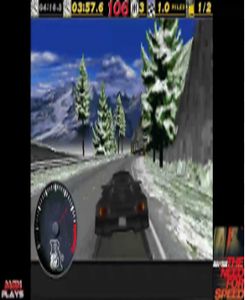
Open-road racing and competitive head-to-head challenges were mixed together in the gameplay. Players competed on lengthy, picturesque courses that featured a range of settings, including metropolitan routes, mountain roads, and seaside highways. The original Need for Speed lacked a wide selection of vehicles and customization possibilities, but its realistic driving mechanics and atmosphere more than made up for it. The game’s realistic sound effects, fluid visuals, and police pursuits, which gave the races an additional degree of thrill and peril, all contributed to the impression of speed.
The presence of traffic and law enforcement on the highways was one of the most notable aspects. Players had to sustain high speeds while dodging civilian vehicles and avoiding being apprehended by the authorities. This produced an exciting dynamic that distinguished The Need for Speed from racers who just competed on tracks. The player would be “busted” at the end of the race if the police were successful in stopping their vehicle. This component increased unpredictability and made players tactically consider whether to drive cautiously and when to take chances.
For its time, the game’s presentation was also a significant advancement. To improve the narrative and give the game a cinematic sense, full-motion video segments were used. The menus, which included history information and excellent automobile photographs, were slick and simple to use. The fast-paced action was excellently complimented by the soundtrack, which combined rock and techno elements. There was a sense of depth and diversity since every racetrack had its own ambiance and attitude. In order to improve their timings and surpass their competitors, players were urged to master each course, studying every curve and straightaway.
The Need for Speed was more realistic than its peers when it came to driving physics. Depending on their weight, power, and drivetrain configuration, cars behaved differently. Because making a turn too quickly may cause the car to spin out of control, cornering needed skill. The creators made an effort to give players a sense of the difference between operating a more balanced sports vehicle and a powerful supercar. Both casual gamers and enthusiasts who valued the game’s regard for actual car performance found this strategy appealing.
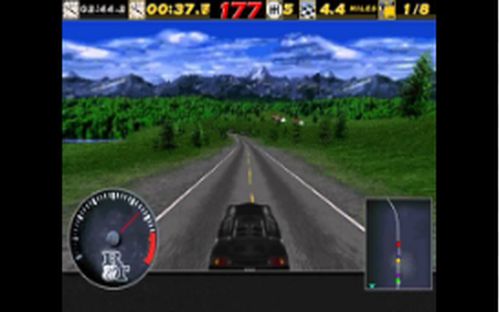
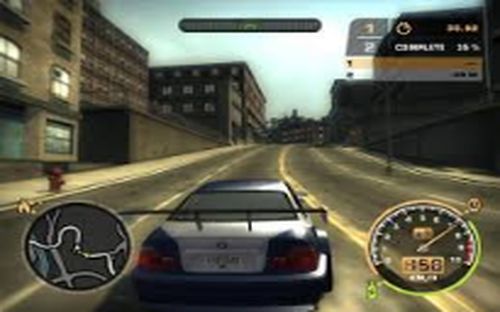
The Need for Speed’s emphasis on the emotional bond between player and machine was another feature that set it apart. Players were encouraged by the game to value the engineering and workmanship that go into each automobile. An immersive experience was created by the way the camera angles changed, the sound of the engines screaming, and the feeling of acceleration. It seemed more like an interactive vehicle magazine than merely a competition because, although being a racing game, it nailed the grace and craftsmanship of automotive culture.
System Requirements OF Need For Speed 1 Highly Compressed PC
| Ram | 8 MB |
|---|---|
| Processor | Intel Pentium 90 MHz |
| Accessories | Keyboard, mouse, and speaker |
| Graphics card | 1 GB |
| Windows | Xp, 7, 8, 8.1, 10, and 11 |
| Free disk space | 100 MB |
The gameplay was kept interesting by the diversity of tracks and settings. Every location, from desert highways and wooded mountain passes to coastal roadways bordered by palm trees, has an own visual character and set of difficulties. Tunnels, bridges, and approaching vehicles were examples of environmental elements that contributed intricacy and realism. These design decisions set the stage for later episodes, as the series’ varied locales and evocative scenery came to define it. A satisfying learning curve was produced by striking a mix between vast stretches for speed and tight turns for skill-based driving.
The Need for Speed was hailed for its complexity and inventiveness when it first came out. The realistic handling, automobile choice, and presentation quality were praised by critics. Long before open-world racing games became popular, players were enthralled with the prospect of driving ideal automobiles in exquisitely portrayed surroundings. Its popularity opened the door for a series that would drastically change over the years, experimenting with everything from police pursuits and cinematic narrative to underground street racing. However, the core values of thrill, speed, and enthusiasm for cars never changed.
Looking back, the original Need for Speed stands as a landmark in racing game design. It raised the bar for what a racing game could do by bridging the gap between arcade enjoyment and driving realism. Its legacy can still be felt in modern entries of the franchise and in the broader racing genre. The game’s emphasis on authentic driving experiences, exotic cars, and the thrill of open-road racing continues to inspire developers and players alike. What began as a simple yet ambitious project has become a timeless symbol of virtual speed and automotive excellence.