The racing game Need for Speed: Shift 2 Unleashed is unique in the long-running Need for Speed series since it emphasizes realism and moves toward a more genuine driving experience. When Shift 2 was released in 2011, the series’ arcade-style gameplay was abandoned in favor of a more simulation-focused style that appealed to die-hard racing fans. Developed by Slightly Mad Studios, the game features a greater degree of driving dynamics, better graphic fidelity, and an engaging career option that would set it apart from its counterparts in the racing genre. It is frequently seen as Need for Speed: Shift’s spiritual successor, taking the essential concepts and honing them for a more captivating and realisticWhen Shift 2 was released in 2011, the series’ arcade-style gameplay was abandoned in favor of a more simulation-focused style that appealed to die-hard racing fans. The game, which was created by Slightly Mad Studios, stands out from its competitors in the racing genre because to its more complex driving dynamics, improved graphic fidelity, and engaging career mode.
The innovative cockpit perspective, which was created to offer players a genuine sensation of speed and immersion, is at the core of Shift 2. The cockpit view in Shift 2 is extremely realistic, in contrast to many racing games at the time. It shows the driver’s hands clutching the wheel, the dashboard, and even the delicate movements of the driver’s head as they accelerate at high speeds or maneuver around tight curves. This level of realism was a daring attempt to give the player the impression that they were actually operating a high-performance car, something that few racing games had ever accomplished. This sense of immersion was further enhanced by the game’s advanced physics engine, which simulated real-world car dynamics, from tire grip toThe cockpit view in Shift 2 is extremely realistic, in contrast to many racing games at the time. It shows the driver’s hands clutching the wheel, the dashboard, and even the delicate movements of the driver’s head as they accelerate at high speeds or maneuver around tight curves. This level of realism was a daring attempt to give the player the impression that they were actually operating a high-performance car, something that few racing games had ever accomplished.

Shift 2’s extensive automobile customization system considered one of its best qualities. From suspension settings to engine tuning, players may alter a variety of performance characteristics of their automobiles, customizing each one to suit their own driving preferences. The customization system focused on how changes affected the car’s handling and overall performance on the track, going beyond the standard cosmetic enhancements featured in many racing games. Because players could experiment with numerous configurations to achieve the ideal balance between speed, control, and stability, this depth made for a more satisfying and customized experience. It also encouraged players to think more strategically about how they approached each race, knowing that even the smallest tweak could make a big difference inFrom suspension settings to engine tuning, players may alter a variety of performance characteristics of their automobiles, customizing each one to suit their own driving preferences. The customization system focused on how changes affected the car’s handling and overall performance on the track, going beyond the standard cosmetic enhancements featured in many racing games.
Another great feature of the game was its career mode, which gave players the opportunity to advance in the racing scene. Players competed in a range of events, from time trials to endurance races, each with its own distinct obstacles, starting with lower-tier vehicles and working their way up to the top level. Faster and more potent vehicles were unlocked by players as they advanced, opening up more possibilities and more formidable opponents. This progression system gave the game a sense of purpose and direction, making each victory feel earned and each setback more impactful. The career mode also featured a series of dynamic events and rivalries, which added a layer of narrative depth to the gameplay.
Shift 2 was a visual extravaganza. The game featured meticulously detailed car models and beautifully designed tracks that captured the essence of real-world racing circuits. Whether it was the rain-soaked streets of a city race or the sun-drenched bends of a European track, the environmental design was nothing short of stunning. The weather system was particularly impressive, with changing conditions affecting the track’s surface and visibility, adding a level of unpredictability that kept players on their toes. The game also boasted dynamic lighting effects that enhanced the sense of realism, making the cars look as though they were truly racing under the glare of the sun or the harsh glare of stadium lights during a night race.
The AI opponents in Shift 2 were another notable feature. The AI in Shift 2 was created to respond to the player’s driving style, which makes every race seem new and difficult in contrast to many racing games where the AI feels programmed and predictable. The game employed a technology called “Driver Profiles,” which allocated distinct driving habits to each AI opponent. Some opponents were aggressive and would attempt to block the player’s progress, while others were more cautious, focusing on precision driving. This diversity in AI behavior guaranteed that each race felt like a new challenge, keeping the game from getting repetitive.
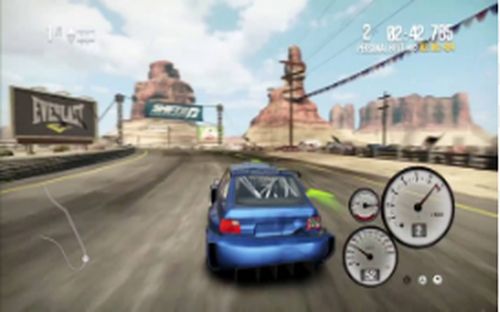


Multiplayer, a vital component of many racing games, was very nicely integrated in Shift 2. Players could compete against other players in a range of race kinds and formats thanks to the game’s split-screen and online multiplayer capabilities. A ranking system that monitored players’ performance and gave them better rankings and awards as they advanced improved the competitive online environment. The multiplayer experience was seamless, with minimal lag and fast matchmaking, making it easy for players to jump into a race at any time. The variety of race options and the ability to fine-tune car setups added an element of strategy to the multiplayer experience, as players had to balance speed with control to outwit their opponents.
System Requirements OF Need For Speed Shift 2 Highly Compressed PC
| Ram | 2 GB RAM |
|---|---|
| Processor | Intel Core 2 Duo 2.4 GHz |
| Accessories | Keyboard, mouse, and speaker |
| Graphics card | 1 GB |
| Windows | Xp, 7, 8, 8.1, 10, and 11 |
| Free disk space | 9 GB |
The learning curve of Shift 2 was one of its more difficult features. Shift 2 demanded a more careful and calculating approach, whereas the arcade-style racing of previous Need for Speed games was accessible to a wide variety of gamers. In order to remain competitive, players had to become proficient in the subtleties of braking, turning, and acceleration due to the sophisticated physics system and the realistic handling of the vehicles. For casual players, this made the game more challenging, but for those who took the time to become proficient with its driving principles, it provided a satisfying experience. For those looking for a more forgiving experience, there were options to adjust the game’s difficulty, but even on the lower settings, the game stillShift 2 demanded a more careful and calculating approach, whereas the arcade-style racing of previous Need for Speed games was accessible to a wide variety of gamers. In order to remain competitive, players had to become proficient in the subtleties of braking, turning, and acceleration due to the sophisticated physics system and the realistic handling of the vehicles.
Another aspect of Shift 2 that was excellent was the sound design. The buzz of the transmission, the scream of tires on the pavement, and the roaring engines of the vehicles all combined to produce an audio experience that enhanced the visual and gameplay aspects. The way the noises varied according on the car’s speed, gear, and terrain demonstrated the attention to detail. As players drove their automobiles to the edge, the game’s dynamic music increased the adrenaline rush by adjusting to the race’s intensity.
Shift 2 has some detractors despite its positive aspects. Some gamers thought that the AI in the game may occasionally be overly aggressive, resulting in annoying obstructions and crashes during races. Additionally, while the game offered a more realistic driving experience, this realism wasn’t always appreciated by those who preferred the fast-paced, over-the-top thrills of the Need for Speed series’ earlier titles. However, for those seeking a more grounded and technical racing experience, Shift 2 was a breath of fresh air, offering a level of depth and realism that was unmatched in many of its contemporaries.